The Psychology Behind E-Commerce Product Pricing
8 January 2026
Ah, e-commerce product pricing—the wizardry of numbers, charm fonts, and flashing red discount stickers. If you’ve ever bought a $29.99 gadget you didn’t need… congratulations, you’re human. And you, my friend, just tangoed with pricing psychology.
In the vast digital jungle of online shopping, setting the right price isn’t just about covering costs and sprinkling a little profit on top. Nah, it’s psychological warfare. It’s the art of making your brain go, “Oooh, what a deal!” even when the deal is basically a shiny illusion.
So today, we’re diving into the wonderfully manipulative (and strangely satisfying) world of psychological pricing tactics used in e-commerce. Buckle up, grab your wallet (for emotional support), and get ready to question every purchase you’ve ever made online.
Why We Buy: Psychology Isn’t Just For Therapists
Ever wonder why $19.99 feels so much lighter on your soul than $20.00? That’s not a coincidence. That’s science—but with a twist of tomfoolery.Pricing in e-commerce leans heavily on cognitive biases—the same little mental shortcuts that make us believe we’ll only spend “a few minutes” on TikTok. These biases can nudge us, push us, and sometimes full-on body slam us into purchasing.
Let’s decode the mental game.
The Magic of .99: Because Apparently, We're All Mentally Discounting Pennies
Ah, the infamous charm pricing—a.k.a. pricing something at $9.99 instead of $10.00. Why? Because our brains are easily impressed.Technically speaking, $0.01 isn’t a huge difference. You could probably find that in your couch cushions. But in our minds, $9.99 looks closer to $9 than to $10. It's like your brain sees the first number and just stops trying. It's exhausted. It's done doing math.
So when you see $49.99, your subconscious goes, “Wow, that’s in the forties!” and not "Oh, it's practically fifty bucks."
Crafty, right?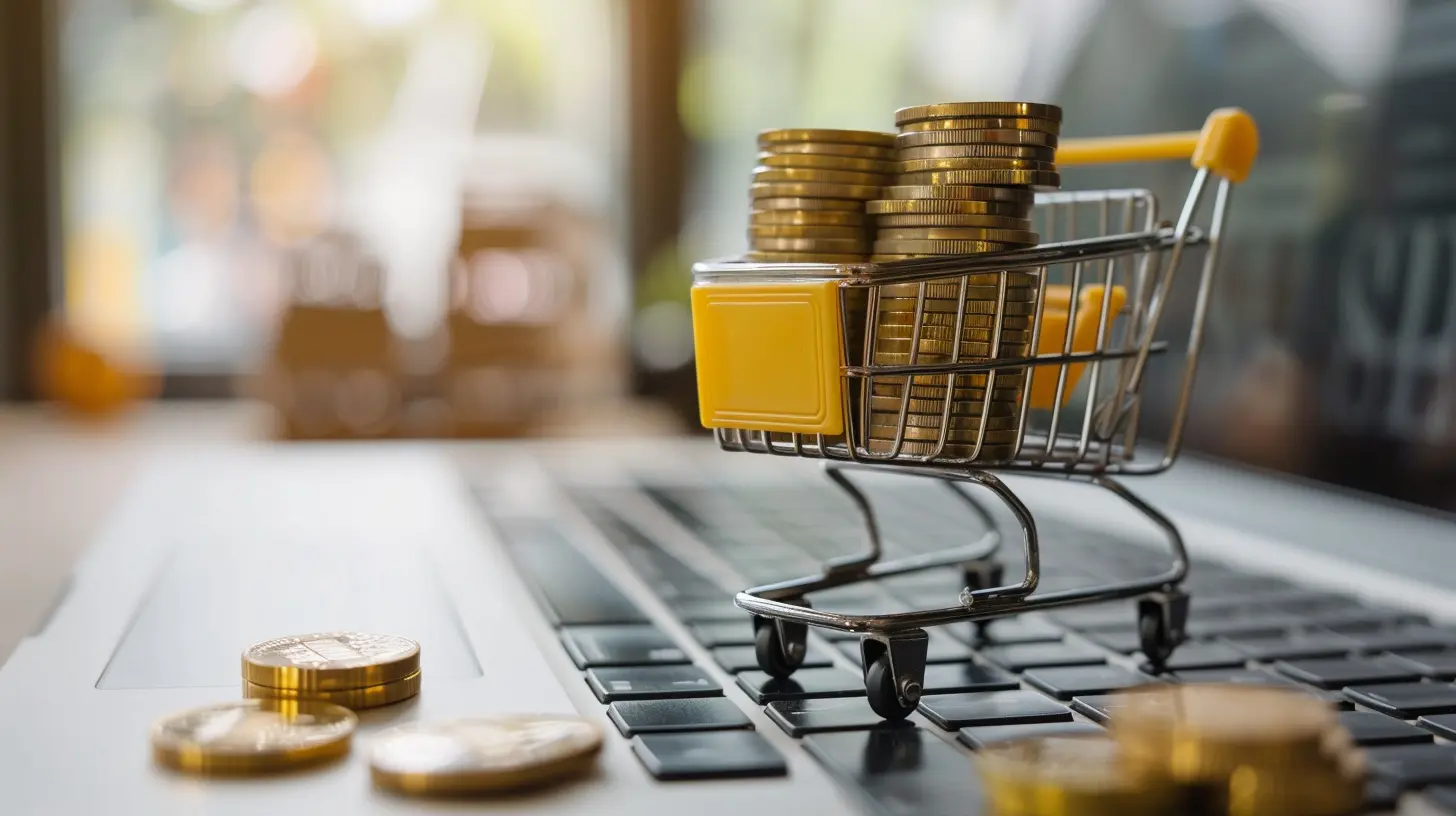
Anchoring: Setting the Bar So High That Anything Looks Like a Deal
Ever seen a product that’s “normally $499” but is now only $249? And you're like, “OMG, I’m saving $250!”?Well, guess what? That “original” price might’ve been made up just to mess with you.
This is called anchoring—a sneaky tactic where companies throw out a high price first to make the real price seem like a steal. It's like when your friend brags about getting a $250 haircut and you're like, “I only paid $30”… suddenly you’re winning at life.
Retailers know we’re judgmental little creatures. We love comparing things. So they drop a fake anchor into the ocean of pricing just to reel you in. Mean, but effective.
The Decoy Effect: Stacking the Odds by Offering a Lame Option
Alright, time to get theatrical. Picture this:- Small coffee: $2
- Medium coffee: $4.50
- Large coffee: $4.75
Which one do you pick? Probably large, right? Because who in their right mind would get medium when it’s just 25¢ less than large?
That medium coffee is a decoy. It's literally there to make the large size look like a bargain. The trick? You weren't supposed to buy the medium. You were supposed to feel smart choosing the "better value."
And in e-commerce, this comes in the form of tiered pricing, bundles, or those “most popular” tags on the pricier option. It’s all smoke and mirrors, baby.
Psychological Pricing Just Got Fancy: Odd vs. Even Pricing
So, odd numbers = better pricing, right? Well, not always.Turns out, even numbers have their moment too. It’s called prestige pricing.
Luxury brands don’t mess around with pennies. You don’t see a Rolex for $9,999.99. It’s just $10,000. Because that screams quality, exclusivity, and "don't even ask for a discount."
Odd pricing makes things feel like a bargain. Even pricing? That’s the VIP lounge. Choose your vibe accordingly.
Flash Sales and Limited-Time Offers: Fear of Missing Out Is a Real Diagnosis
Let’s talk FOMO. Because nothing triggers a panic purchase quite like a ticking timer.“Only 2 left in stock!” “Sale ends in 1 hour!” “7 people are looking at this right now!”
That’s not information. That’s emotional blackmail.
Scarcity and urgency are powerful psychological triggers. They tap into our primal instincts: “If I don’t grab it now, someone else will.” So we jump, wallets first, into action.
Limited-time deals create that endorphin-fueled adrenaline rush. It's shopping on hard mode. And guess who wins? The seller.
Freemium Models: The Gateway Drug to “Just One More Feature”
We’ve all fallen into the trap. A website says, “Try it free!” and three weeks later you’re handing over your credit card like a zombie.Freemium pricing plays on the idea of investment. Once we’ve put in the time (or created a killer playlist), we have to upgrade. Because we can’t possibly let all that effort go to waste.
Plus, once we get comfortable using a product, parting with a few bucks seems reasonable. Who wants to start over with a new app?
E-commerce platforms love this tactic. It’s like offering free samples at Costco—except digital, and more addictive.
Pay What You Want: Social Pressure in a Hoodie
Some brands are like, “Hey, pay what you want!” and we’re like, “Awww, that’s so sweet of them!”But hold up—there’s brain manipulation happening here too.
Pay-what-you-want pricing relies on social norms and guilt. We don’t want to look like cheapskates, even online. So, we end up paying more than the minimum, sometimes even more than we would’ve paid with a fixed price.
Because no one wants to be “that guy.” You know, the one who pays $0.01 for an indie artist’s entire album… and then tweets about it.
Dynamic Pricing: When Your Price Isn’t My Price
Here’s a spicy one: dynamic pricing. That’s when companies change prices based on who you are.Yeah… creepy.
Have you ever noticed how flight or hotel prices shoot up after you search for them a couple of times? That’s not paranoia—it’s the algorithm playing mind games.
Dynamic pricing uses location, browsing history, device type, even the weather (seriously!) to adjust prices. You and your neighbor could be seeing totally different prices for the same shoes.
So much for fairness, huh?
Bundle Deals: Because 3 Meh Products Together Seems Better Than 1 Great One
Who doesn’t love a good bundle? Buy one, get the second half-off, and the third for a dollar!It’s like the pricing equivalent of “but wait, there’s more!”
Bundling taps into our craving for value. Even if we don’t need all those items, the perceived discount makes it irresistible.
Plus, when we see individual product prices skyrocket, bundles start looking like the adult version of a Happy Meal. Surprise and savings? Yes, please.
Price Ends in 7? Welcome to E-Commerce Voodoo
Ever seen prices ending in 7, like $47 or $97? That’s not random. That’s price testing sorcery.Many marketers believe that the number 7 is more effective at converting than .99 or .95. Why? Nobody knows for sure. Maybe it feels less generic? Maybe it implies a strategic, well-thought-out price?
Or maybe it’s just that we’re suckers for oddities.
Either way, it works. So don’t be surprised if you're seduced by something priced at $37 next time you’re scrolling through an online course.
Pricing in Colors: Red = Danger. Or Discount. Or Both.
Here’s a weird one: color psychology in pricing.Red is often used for sale prices because it feels urgent. It grabs attention. It screams, “Act now, or regret forever!”
Compare that to blue or black pricing fonts, which feel more relaxed and professional. It’s no coincidence that clearance items are red-tagged and luxury items are in elegant neutrals.
The color of your price can influence how it's perceived just as much as the numbers. Wild, right?
Ending the Game: How Sellers Make You Feel Like a Genius for Spending Money
Here’s the ultimate plot twist: pricing psychology isn’t just about tricking you—it’s about making you feel smart for buying. Like you’ve game-the-system, found a loophole, or scored something others didn’t.And that, dear reader, is the golden ticket.
When you feel good about a purchase, you come back. You trust that seller. You tell friends. You become a walking, tweeting, TikToking ad—and all because they priced something just right.
What This Means for E-Commerce Sellers (aka The Puppet Masters)
If you're on the selling side of e-commerce, pricing psychology isn’t optional—it’s survival.In a market where attention spans are shorter than a TikTok video, the way you present your price can make or break your sales. The price isn't just a number; it’s a story, a signal, a handshake, and a handshake that whispers “Trust me, I gotchu.”
Test everything. Be intentional. And for the love of $9.99, please don’t pick your prices at random.
Final Thoughts: Are We All Just Pricing Pawns?
Look, I’m not saying every time you click “Add to Cart” you’re being brainwashed. But I’m also not not saying that.The psychology behind e-commerce product pricing is a deliciously twisted game of perception, persuasion, and PowerPoint presentations. Sellers play psychologist; buyers play detective (or impulsive goblin, depending on the day).
So, next time you see a $49.95 “limited offer” with a timer screaming at you, take a breath. Ask yourself: Is this a deal… or is someone Jedi-mind-tricking me?
Then decide if you care. Because sometimes, knowing you're being manipulated doesn't make the dopamine hit any less sweet.
all images in this post were generated using AI tools
Category:
E CommerceAuthor:

Ian Stone
Discussion
rate this article
2 comments
Capri Jackson
Great insights! Understanding the psychology behind pricing really can make a difference in e-commerce. It’s fascinating how a few simple tweaks can boost sales and enhance customer experience!
January 29, 2026 at 1:07 PM
Ian Stone
Thank you! I'm glad you found the insights valuable. Small changes in pricing strategy can indeed have a big impact on sales and customer satisfaction!
Veronica McClary
Mastering pricing strategies unlocks your e-commerce potential—transform perceptions and drive unbeatable sales!
January 13, 2026 at 5:30 AM
Ian Stone
Thank you! Understanding pricing psychology is indeed crucial for transforming customer perceptions and maximizing sales in e-commerce.