Decision-Making Under Uncertainty: How Analytics Mitigates Business Risk
26 February 2026
Running a business without data-driven decisions is like driving a car blindfolded—you might move forward, but you're bound to crash sooner or later. In today’s fast-paced world, uncertainty is the only certainty. Businesses constantly face unpredictable market trends, economic shifts, competitive pressures, and customer behaviors that can turn the tide at any moment.
So, how do you make decisions when the future is foggy? Enter analytics—the secret weapon that helps businesses navigate uncertainty and mitigate risk like a seasoned chess grandmaster planning ten moves ahead.
From predicting market fluctuations to optimizing operational efficiency, analytics provides clarity, enhances decision-making, and safeguards businesses from unnecessary pitfalls. Let’s dive into how analytics can be a game-changer in managing uncertainty and minimizing business risks. 
The Reality of Decision-Making Under Uncertainty
Uncertainty is a business’s worst nightmare. Whether you're launching a new product, investing in a marketing campaign, or expanding into a new market, every decision carries a risk.Without data, decision-making is purely based on gut feelings—a strategy that might work occasionally but is hardly reliable. And in high-stakes environments, relying on intuition alone is like playing Russian roulette with your business.
So what's the impact of uncertainty on business?
- Financial Risks – Bad choices can lead to massive financial losses.
- Operational Disruptions – Inefficiencies and poor resource allocation can cripple a business.
- Market Misalignment – A wrong move can make your product or service irrelevant.
- Competitive Disadvantage – Poor decision-making can set you back while competitors surge ahead.
The good news? Analytics can act as your crystal ball—helping you predict, prepare, and make smarter choices. 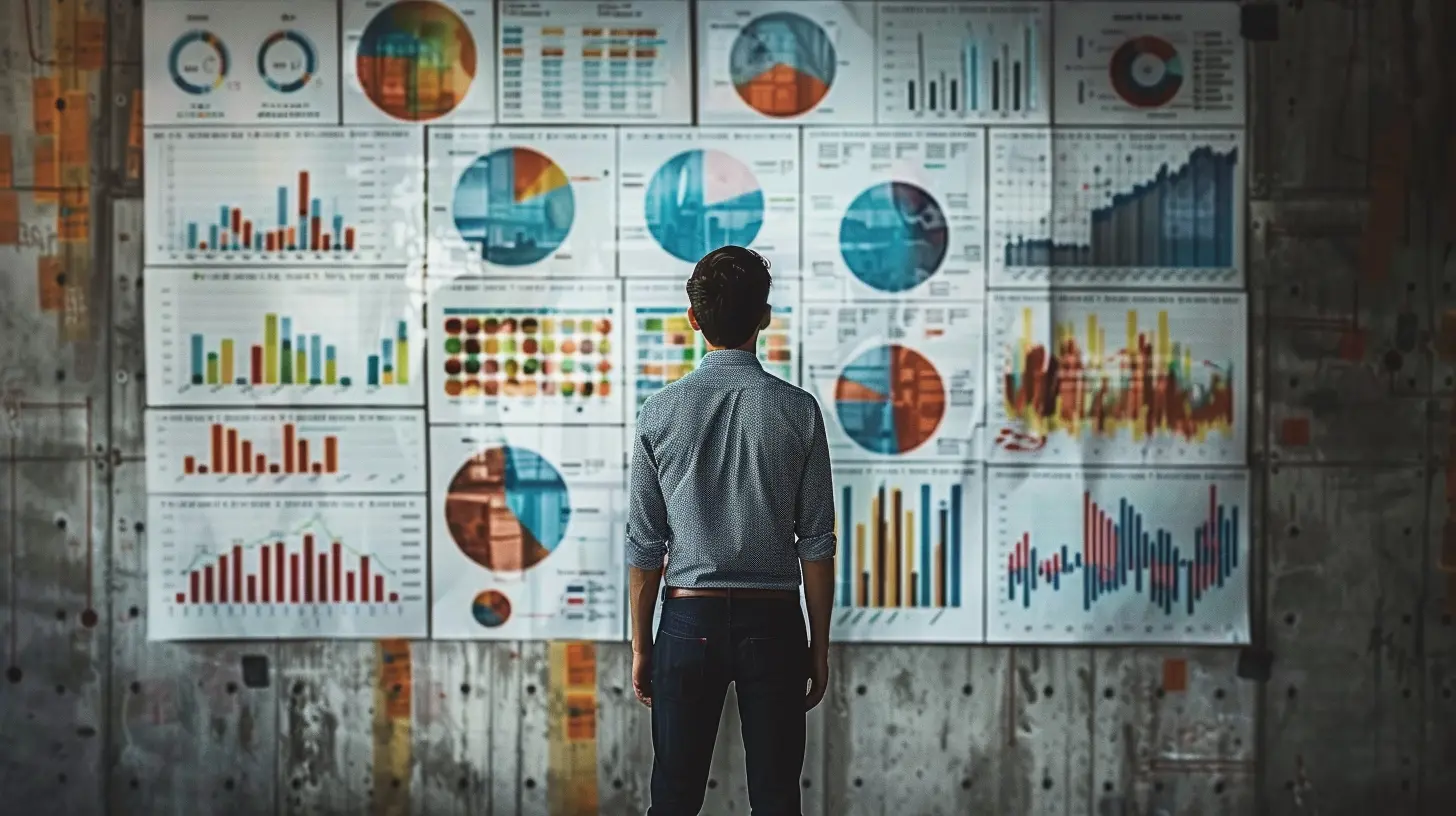
How Analytics Transforms Decision-Making
1. Data-Driven Insights Replace Guesswork
Imagine making a big decision without data—it’s like throwing darts in the dark and hoping to hit your target. Analytics eliminates this uncertainty by providing valuable insights based on real numbers, trends, and patterns.- Customer analytics helps businesses understand purchasing behaviors, preferences, and trends.
- Market analytics identifies emerging patterns, potential risks, and new opportunities.
- Operational analytics improves efficiency and resource allocation.
By leveraging data, businesses no longer rely on hunches but make informed, strategic decisions that are far more likely to succeed.
2. Predictive Analytics: Seeing the Future Before It Happens
Wouldn’t it be great if you could spot risks before they hit? That’s exactly what predictive analytics does.Using historical data, AI, and machine learning, predictive analytics identifies potential business risks by analyzing trends and forecasting future scenarios.
- Retailers use predictive analytics to anticipate demand, avoid overstocking, and prevent supply chain issues.
- Financial institutions assess credit risks to prevent bad loans and fraud.
- Healthcare providers forecast patient needs and allocate resources effectively.
It's like having a weather forecast for business uncertainties—you get to pack an umbrella before the storm hits.
3. Scenario Planning: Preparing for the "What-Ifs"
Ever played chess? Every skilled player considers multiple moves ahead, preparing for different scenarios. Analytics helps businesses do the same by running simulations and "what-if" analyses.For example, imagine a company planning a product launch. What if:
- Customer demand is lower than expected?
- A competitor releases a similar product at a lower price?
- Supply chain disruptions delay production?
Scenario planning lets businesses prepare for all possible outcomes, ensuring they have backup strategies for every twist and turn.
4. Risk Assessment and Mitigation
Analytics plays a crucial role in identifying risks before they escalate. Businesses can assess threats in real-time and take proactive measures to mitigate them.Consider cybersecurity—companies use data analytics to detect unusual activities and prevent cyber threats before they cause damage. Similarly, investment firms analyze market trends to avoid financial pitfalls.
By identifying and addressing risks early, businesses can save millions of dollars and maintain stability.
5. Enhancing Real-Time Decision-Making
In today’s digital era, businesses don’t have the luxury of waiting weeks or months to analyze data manually. Real-time analytics provides instant insights, allowing companies to make swift, informed decisions.For instance:
- E-commerce platforms adjust prices on the fly based on customer demand.
- Social media teams modify marketing strategies in real-time based on engagement data.
- Supply chain managers reroute shipments to avoid delays.
With real-time data, businesses can pivot quickly and stay ahead of the competition. 
Real-World Success Stories of Analytics in Decision-Making
Netflix: Data-Driven Content Strategy
Ever wondered how Netflix seems to know exactly what you want to watch? That’s analytics at work. By analyzing viewing patterns, Netflix predicts user preferences, tailors recommendations, and even decides which shows to produce.Amazon: Mastering Inventory Management
Amazon uses predictive analytics to manage its massive supply chain, ensuring products are stocked in the right locations to minimize delivery time and cost. This keeps customers happy while optimizing operational efficiency.Tesla: Revolutionizing the Auto Industry with AI
Tesla leverages real-time analytics and AI to enhance vehicle performance, predict maintenance needs, and even improve self-driving capabilities.These companies are proof that data-driven decisions aren’t just useful—they’re essential for staying competitive. 
Challenges of Using Analytics in Decision-Making
While analytics is a powerful tool, it's not without challenges:- Data Overload – Too much data can be overwhelming. Businesses need to focus on relevant metrics.
- Quality of Data – Poor data leads to misleading insights. Companies must ensure accuracy.
- Implementation Costs – Investing in analytics tools and expertise can be expensive, but the long-term benefits outweigh the initial costs.
- Resistance to Change – Some leaders still prefer gut instincts over data. A strong data-driven culture is essential.
Despite these challenges, businesses that prioritize analytics gain a significant edge in decision-making.
The Future of Analytics in Business Decision-Making
The evolution of analytics is just getting started. With advancements in AI, machine learning, and big data, analytics tools are becoming even more powerful and accessible.In the near future, we can expect:
- Automated Decision-Making – AI-driven insights will reduce human intervention in routine decisions.
- Deeper Personalization – Businesses will deliver even more tailored experiences to customers.
- Enhanced Risk Prediction – More accurate models will allow companies to foresee and mitigate risks with greater precision.
Ultimately, data will continue to be the driving force behind smarter, faster, and more effective business decisions.
Final Thoughts
In a world filled with uncertainty, making business decisions without analytics is like sailing without a compass. Data provides the clarity, direction, and confidence needed to navigate risks and seize opportunities.Whether you’re a startup or a global enterprise, leveraging analytics ensures you stay ahead of the curve, make informed choices, and minimize risks that could otherwise sink your business.
So, are you ready to let data lead the way?
all images in this post were generated using AI tools
Category:
Business AnalyticsAuthor:

Ian Stone
Discussion
rate this article
2 comments
Meredith Ramirez
This article raises fascinating points about the intersection of analytics and decision-making under uncertainty. How can businesses effectively integrate these analytical tools into their existing frameworks? I'm particularly curious about the specific case studies or examples that highlight the tangible impact analytics has on reducing risk. Would love to hear more!
March 17, 2026 at 12:20 PM
Ian Stone
Thank you for your insightful comment! Businesses can effectively integrate analytical tools by fostering a data-driven culture, investing in training, and utilizing case studies like XYZ Corp., which saw a 20% reduction in risk through predictive analytics. I’d be happy to explore more examples in future discussions!
Kenneth Graham
Effective decision-making under uncertainty is crucial for businesses. Utilizing analytics not only enhances data-driven insights but also significantly reduces risk, empowering organizations to navigate unpredictable environments with greater confidence and agility.
February 28, 2026 at 5:13 AM
Ian Stone
Thank you for your insightful comment! I completely agree that analytics plays a pivotal role in enhancing decision-making and mitigating risks in uncertain business environments.